
The Story Goes Second
Stories sell, but they go second. The pain point buys attention, the value proposition buys the click, and the story is what makes the sale stick.
Justin Allan, NP4 min read
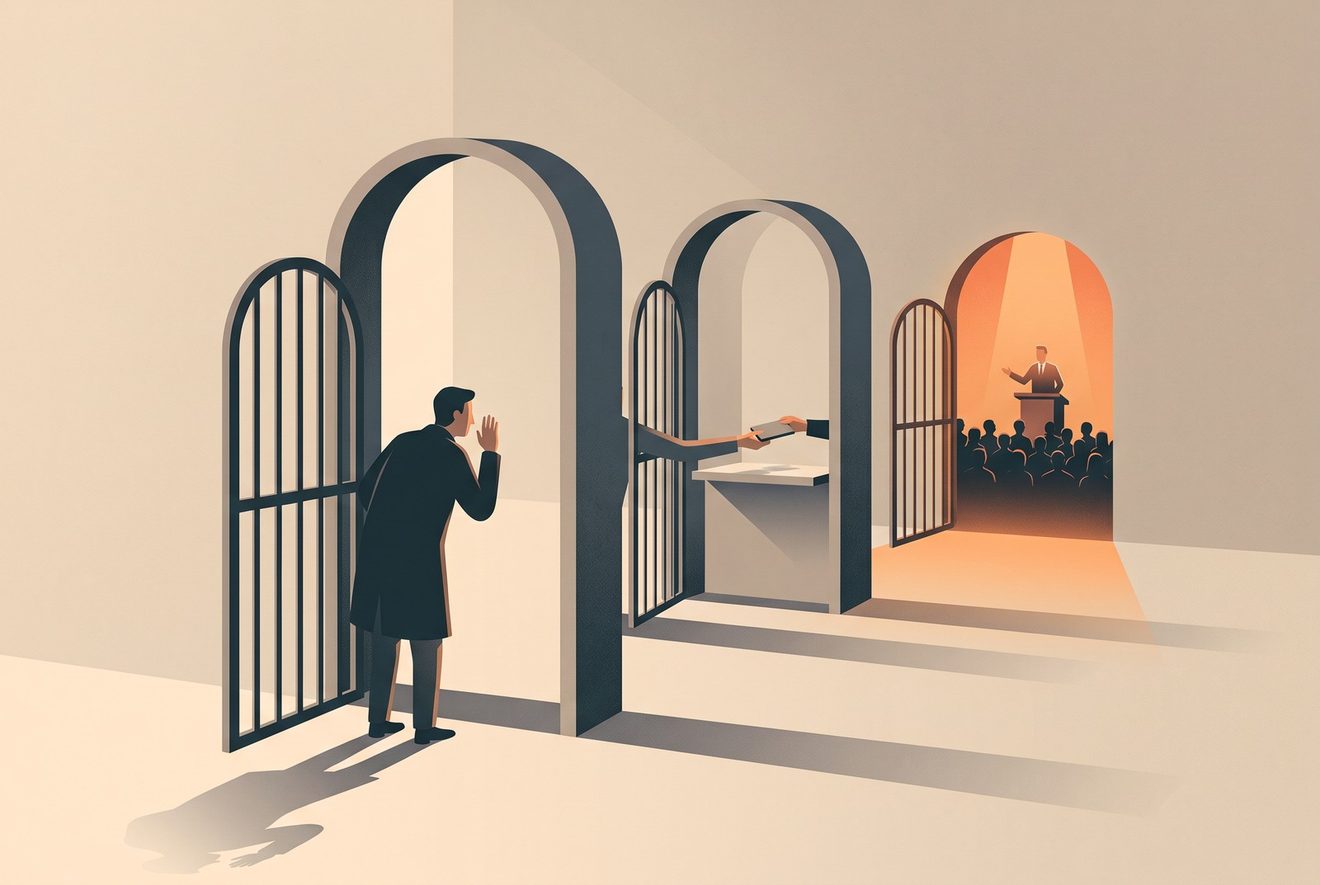
Facts tell, stories sell.
Somebody says this in every marketing course ever recorded, and it is true. It is also, read carelessly, the reason a great many ads written by smart professionals do nothing at all — because people hear it as an instruction about where the story goes.
The story does not go first. It goes second, and the difference is most of the result.
The before
Here is the ad a professional writes on their first attempt. Nearly everybody produces some version of it.
Ten years ago I was working nights and wondering whether I had picked the wrong career. I had no idea what I was doing. Over the next few years I figured out a system that changed everything for me, and I want to share it with you. Click below to learn more about my new course.
Read it as yourself and it is fine. Warm, honest, human.
Now read it as a stranger scrolling a feed at a red light who has never heard your name. You have between one and two seconds of their attention, and you have spent it on a person they do not know having a feeling they cannot yet locate. By the time the ad says anything about them, they are three posts further down.
The story was not the problem. Its position was.
The after
Same person. Same story. Same course. Reordered.
Still charting after your shift ends? There is a way to run your documentation that gets you out on time, and it is not working faster. I spent three years working nights before I figured it out. Learn how it works.
Look at what each part is doing.
Line one is the pain point, and it is doing the only job that matters at that moment: making somebody stop. It is not clever and it is not selling. It names, in the reader's own words, a thing that happened to them this week. The right response from a reader is either a flash of irritation or a small yes, exactly — you want their head moving before they have decided anything.
Line two is the value proposition — the problem, then the solution. Now that they are reading, tell them what you have. Plainly.
Line three is the story, and it is one sentence. That is all it needs to be at this stage, because its job here is not to move anyone. Its job is to establish that the solution comes from somebody who has actually stood where they are standing. It buys credibility for the click, not the click itself.
Then the link, and the long version lives on the other side of it.
Why the order is not arbitrary
The sequence follows the attention you actually have, which is far less than anyone plans for.
A written ad has one to two seconds to earn a stop. A video has perhaps five to ten. So whatever has to land, lands immediately — which means the pain point, every time, in the first sentence, in the subject line, in the first five seconds of the video.
This is also why ads should be short. Five hundred words is a ceiling for a written one, thirty to sixty seconds for a video. If you have a twenty-five minute video that genuinely explains everything, that is a landing page asset. Nobody is watching it from a feed, and running it as an ad mostly buys you the privilege of being scrolled past at length.
The long story, the full origin, the detailed case — all of it belongs after the click. That is where somebody who has already raised their hand goes to be convinced, and there you have as long as you have earned.
The part nobody can write for you
Here is why the story has to be in there at all, rather than being cut as sentimental.
You can hire someone to write ad copy. You can put a draft through a language model and get back something tighter. Both are reasonable, and I would still write the first version myself, because of one thing neither can do.
You are your audience. You had the problem you are now solving. When you write I spent three years working nights before I figured it out, that sentence is load-bearing in a way that no copywriter can manufacture, because the reader is checking whether you are one of them or someone selling at them. A professional can tell the difference in about a sentence, and being wrong about it is fatal in a way it simply is not in consumer advertising.
Which brings up the register.
You have seen the other style — the pointing-finger emojis, the trailing dots, the line breaks every four words. It works on some markets. Yours is not one of them. You are writing to people who read professional material all day and who will read that formatting as a signal about what kind of product sits behind it. Straight sentences. The problem, the solution, the product. If what you built is good, it does not need decoration, and the decoration actively costs you with this audience.
Be a person. Use your own phrasing and your own rhythm. Professional and authentic are not in tension — the most effective people in this space are almost never the most polished ones.
The rewrite
If you have an ad that is not working, do not start over. Take the version you have and move the pieces.
Find the sentence in it that names your reader's actual problem, in their language, and put that first. Find the sentence that says what you have and put it second. Cut your story down to one line and put it third. Everything else that you loved and cannot bear to lose goes on the landing page, where it will finally be read by people who want it.
Stories do sell. They just do not open.